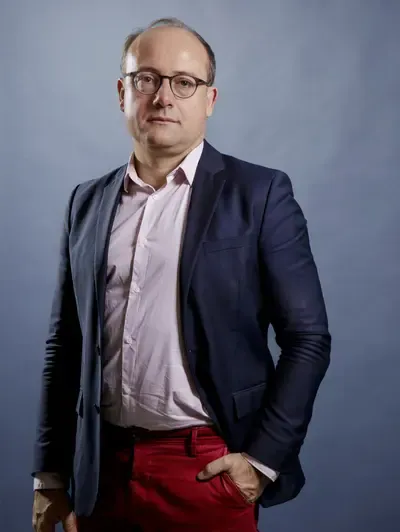
Johann Chapoutot presents “THE TURNING POINT”, on the 1930s, on Friday 30 October at 19:00 at La Sittelle. Free admission.
About this event in the Jura in Saint-Laurent-en-Grandvaux
Understanding the turning point of 1933
The Centre Culturel is organising a themed lecture on the 1930s, “THE TURNING POINT”, given by historian Johann Chapoutot. It takes place on Friday 30 October at 19:00 at La Sittelle, in Saint-Laurent-en-Grandvaux. Admission is free.
At the heart of the lecture is 30 January 1933, when Germany stepped into the unknown. The Nazis were installed in power when they had given up hope of it. No one knew how they would govern, nor had anyone anticipated the institutional carnage they would unleash.
The role of the right and German reluctance
The lecture examines a right wing obsessed with the growing power of the communists. It sought to protect the economic, tax and social interests of the wealthy elites and to put an end to democracy. To do so, it relied on Nazi violence against political opponents and trade unionists, but also against immigrants, Jews and all the “undesirables” it abhorred.
Yet Germans showed reluctance. Two failures bear witness to this: the spectacular failure of the Nazi trade union in workplace elections, and that of the antisemitic boycott of 1 April 1933.
Six months for a “seizure of power”
The account follows this “seizure of power” over six months, up to 14 July 1933, the date of the last cabinet meeting before the summer holidays. It was made possible by the shift of several elite groups that had worked in favour of the Nazis.
The army, the Catholic Church, the judiciary and the senior civil service were among these groups, as were the liberal media, which tried to appease the monster. Employers, the Protestant clergy and large agricultural landowners had already made their choice: the worst possible outcome for the German people.
Johann Chapoutot, cultural historian
Presented as one of today's most renowned French historians, Johann Chapoutot is Professor of Contemporary History at Sorbonne Université. He specialises in the history of Nazism, Germany and Western modernity. His work belongs to the field of cultural history.
The author of around ten books translated into fifteen languages, he has won several awards, notably for La Loi du sang, penser et agir en nazi and Les Irresponsables : Qui a porté Hitler au pouvoir ? (2025).